Most people don’t think twice about the ductwork running through a factory or workshop, until something goes wrong.
Industrial air duct systems quietly do some of the most important work in any production environment: pulling dust and fumes away from workers, maintaining air quality, and keeping facilities compliant with health and safety standards.
Understanding the key components helps you make smarter decisions whether you’re installing a new system or maintaining an existing one.
Ductwork: The Foundation
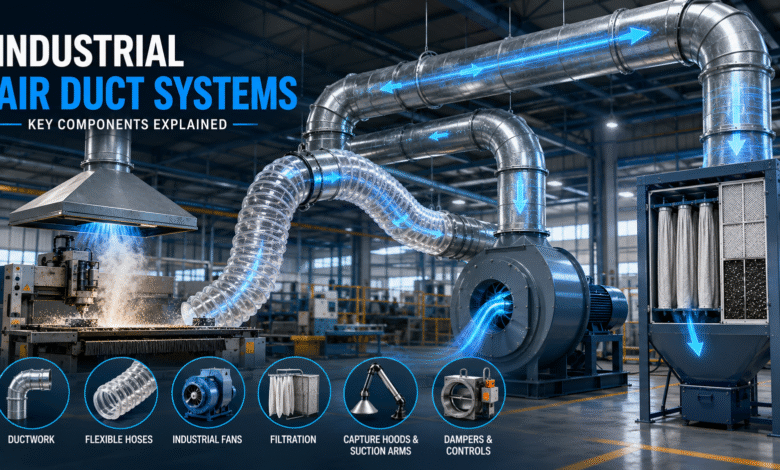
The duct network is the physical pathway air travels through the entire system. Most industrial ducts are made from galvanized steel for general use, stainless steel in food or chemical environments, or aluminum where weight is a concern.
Sizing matters enormously, ducts that are too wide lose airflow velocity and allow dust to settle inside (a fire hazard), while undersized ducts strain the fans and waste energy. A properly engineered duct layout balances both.
Flexible Hoses for Connections and Movement
Rigid ducts handle the main runs, but flexible hoses are essential wherever there’s vibration, movement, or equipment that gets repositioned. A practical option for these situations is the tubo trasparente flessibile, a transparent flexible hose available by the metre.
Its clear design lets technicians visually check for blockages or buildup without dismantling anything, which is a genuine time-saver in high-dust settings like woodworking shops or tile cutting facilities.
When choosing any flexible hose, consider temperature rating, abrasion resistance, and compatibility with the material being extracted.
Industrial Fans
The fan generates the suction that drives the whole system. Centrifugal fans are the standard choice for dust and fume extraction, handling high pressure across long duct runs with multiple bends.
Axial fans suit high-volume, lower-pressure ventilation. In environments with explosive dust certain wood dusts, grain, or metal powders, an ATEX-certified fan is a legal requirement, not an optional upgrade.
Filtration
Filters are where contaminated air actually gets cleaned. Most systems use staged filtration:
- G4 pre-filters catch larger particles and protect finer filters from overloading
- F7/F9 bag filters handle the bulk of industrial dust
- HEPA filters (H13/H14) for pharmaceutical, medical, or cleanroom environments
- Activated carbon filters for solvents, VOCs, and odors in spray booths or chemical areas
The right combination depends on what you’re extracting and the air quality standards your industry requires.
Capture Hoods and Suction Arms
Capturing contaminants close to the source is far more efficient than trying to clean the whole room. A hood positioned near a grinding wheel or welding torch extracts fumes before they spread, reducing the airflow volume needed across the entire system.
Articulated suction arms are popular in metalworking for their flexibility, while fixed canopy hoods work well above tanks or ovens with consistent emission points.
Dampers and Controls
In systems serving multiple machines, motorized dampers direct airflow where it’s actually needed, no point running full extraction to an idle workstation. Fire and smoke dampers are a separate safety requirement, closing automatically during a fire to stop flames and smoke moving through the duct network.
On the controls side, variable frequency drives (VFDs) on fan motors adjust speed based on real demand, cutting energy costs significantly in facilities with variable production schedules.
Final Thoughts
Every component in an industrial air duct system has a job to do, and choosing the right spec for each one determines whether the system performs reliably for years or becomes a recurring maintenance headache. From duct sizing and filtration to flexible connections and fan selection, the details matter.
For facilities that want expert guidance from design through to installation and maintenance, working with an experienced specialist makes a real difference.
Airmec has been delivering industrial air treatment solutions since 1985, with certified expertise across HVAC, dust extraction, filtration, and duct sanification for clients across a wide range of industries. Getting the system right from the start is always more cost-effective than fixing problems down the line.