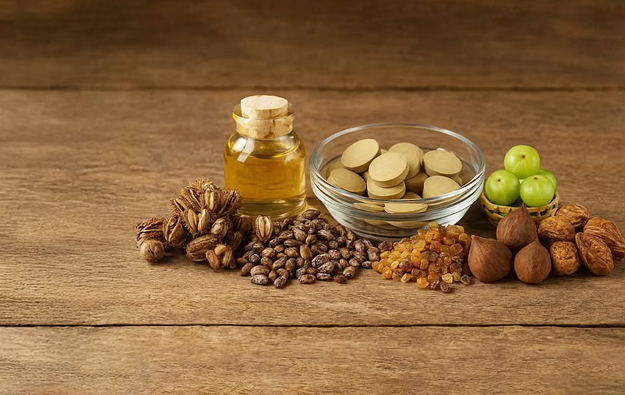
Joint pain often starts with toxin buildup and internal swelling. Ayurveda links this pain to an imbalance in the body’s natural systems. Triphala guggulu is a traditional herbal remedy used to manage stiffness and discomfort in the joints.
Triphala guggulu combines three fruits from Triphala with the resin of the guggul tree. This blend works on digestion, circulation, and inflammation at the same time. Many people use it as part of long-term joint care.
The Science of Joint Relief
Triphala guggulu works by targeting inflammation at its source. Guggul resin contains compounds called guggulsterones. These compounds help reduce swelling in connective tissues. Less swelling means less pressure on joints like your knees, shoulders, and lower back.
In Ayurveda, joint disorders often fall under Vata Vyadhi. This term refers to conditions linked to an imbalance of the air element in the body. Symptoms include dryness, cracking sounds, stiffness, and pain. Triphala guggulu supports balance and helps reduce these symptoms over time.
Another key concept in Ayurveda is Ama. Ama refers to metabolic waste that builds up due to poor digestion. When Ama collects in the joints, you feel pain and heaviness. Triphala guggulu supports digestion and helps clear this waste. Better digestion improves blood flow. Improved blood flow brings nutrients to cartilage and joint tissues.
Ask Ayurveda to explain these traditional concepts in simple terms. The platform connects you with expert guidance on how herbal combinations work inside your body.
Benefits for Daily Mobility
Triphala guggulu supports steady improvement. You will not see instant results. You build progress with regular use and a proper diet.
Here are the practical benefits you may notice:
● Lower uric acid levels in the blood
● Reduced joint stiffness in humid weather
● Easier joint movement
● Better weight control, which reduces pressure on knees and hips
● Improved digestion, which limits toxin buildup
When your digestion improves, your joints receive better nourishment. When your weight stays stable, your joints carry less load. These small changes add up over time.
Many people report fewer flare-ups in chronic joint conditions when they follow a consistent routine. Ask Ayurveda shares case-based explanations and expert responses to common joint health concerns.
Natural Support for Inflammation
Chronic inflammation drains your energy. You feel tired and slow. Oxidative stress damages cells and speeds up joint wear. Triphala guggulu acts as an antioxidant. Antioxidants protect tissues from damage caused by free radicals.
Warm water improves the absorption of triphala guggulu. This simple step supports better tissue penetration. Timing also matters. Many Ayurvedic practitioners suggest taking herbal supplements after meals to support digestion.
Diet plays a key role in results. You should:
● Reduce processed sugar
● Limit excess salt
● Avoid heavy and oily meals
● Include anti-inflammatory foods like turmeric and ginger
When you align your diet with herbal support, you improve your overall response.
See also: How Encryption Protects Data
Why Professional Guidance Matters?
Your body type is unique. Your digestion, lifestyle, and stress levels influence how you respond to herbs. You need guidance based on your condition.
Ask Ayurveda offers expert answers to health questions related to joint pain and herbal remedies. You get clear advice on dosage, timing, and lifestyle adjustments. This helps you make informed decisions about adding triphala guggulu to your routine.
If you face joint stiffness, recurring inflammation, or digestive issues linked to joint pain, visit Ask Ayurveda. The platform allows you to ask specific questions and receive direct responses from knowledgeable professionals.
Triphala guggulu supports joint health through digestion, detoxification, and inflammation control. With the right diet and expert guidance from Ask Ayurveda, you build a steady path toward better mobility and long-term joint strength.