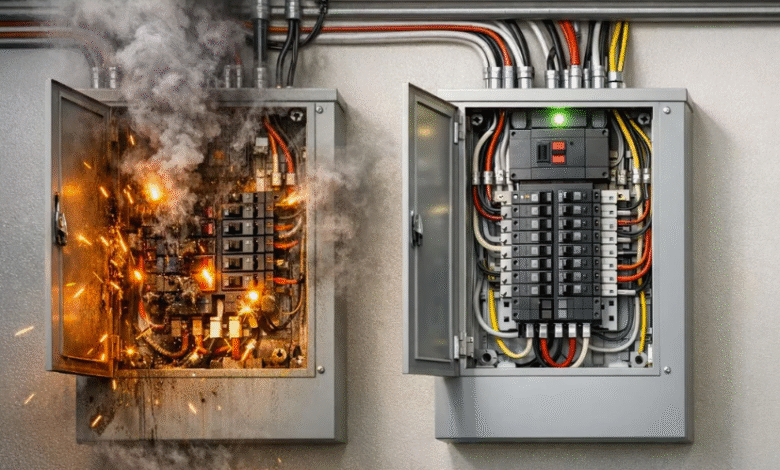
Electrical systems must safely distribute power while protecting wiring and equipment from potentially dangerous conditions. The electrical panel plays a central role in this process by housing circuit breakers and other distribution components.
Understanding how these protective devices work helps homeowners recognize the importance of proper installation, circuit design, and professional electrical maintenance.
The Basic Function of an Electrical Panel
An electrical panel receives electricity from the building’s electrical supply and distributes it through individual branch circuits.
Each branch circuit provides electricity to designated outlets, lighting fixtures, or permanently installed equipment.
Circuit breakers are designed to interrupt electrical current when certain abnormal conditions occur.
Their protective functions help reduce the risk of conductor overheating and related electrical hazards.
Understanding Electrical Overloads
An electrical overload occurs when a circuit carries more current than it is designed to handle under the applicable operating conditions.
This may happen when several high-powered appliances operate simultaneously on the same circuit.
Common Causes of Circuit Overloading
Portable heaters, kitchen appliances, and other devices can create substantial electrical demand.
Connecting multiple high-wattage appliances to a single circuit may cause its breaker to trip.
Overloading should never be addressed by installing a larger breaker without evaluating the associated wiring.
How Short Circuits Occur
A short circuit develops when an unintended low-impedance electrical connection allows excessive current to flow.
Damaged insulation, faulty equipment, or incorrect wiring can contribute to short-circuit conditions.
Short circuits may generate significant heat and electrical energy within a very short period.
The Role of Circuit Breakers
Circuit breakers designed for short-circuit protection respond to excessive fault current.
Their interrupting ratings must be suitable for the available fault current at the installation.
Using incorrectly rated protective devices can create serious safety risks.
Why Proper Breaker Selection Matters
Circuit breakers must be selected according to the electrical system’s design and the manufacturer’s equipment requirements.
A breaker that fits physically into an enclosure may not be approved for that particular panel.
Incompatible breakers can create poor electrical contacts and potentially dangerous operating conditions.
Qualified electricians verify breaker ratings and compatibility before installation.
Additional Electrical Protection Technologies
Modern residential systems may incorporate specialized protective devices.
Ground-Fault Protection
Ground-fault circuit interrupters detect certain electrical current imbalances associated with ground faults.
They help reduce the risk of electric shock in applicable circumstances.
Arc-Fault Protection
Arc-fault circuit interrupters are designed to identify certain hazardous electrical arcing patterns.
They offer protection beyond conventional overcurrent devices.
Surge Protection
Surge protective devices can help limit certain transient overvoltages that may affect connected equipment.
Their effectiveness depends on proper selection and installation.
Evaluating Existing Electrical Distribution Equipment
When a panel experiences recurring problems, professional troubleshooting should identify the underlying causes.
A licensed electrician may examine circuit loading, breaker performance, wiring condition, and equipment compatibility.
If the existing enclosure or internal components are damaged beyond appropriate repair, electrical panel replacement Chicago may become a relevant option for homeowners seeking to restore safe and reliable electrical distribution.
Replacement decisions should follow a documented assessment rather than being based solely on repeated breaker trips.
Conclusion
Electrical panels help protect residential wiring from overloads and short circuits through properly selected protective devices.
Their effectiveness depends on suitable equipment, correct circuit sizing, and professional installation.
Homeowners who recognize electrical warning signs and address problems promptly can support safer and more reliable household electrical systems.